Sciatica vs Lower Back Pain: Key Differences & Treatment
This voice experience is generated by AI.
Back pain that shoots down your leg feels very different from an ordinary sore back. Knowing the difference between sciatica vs lower back pain is the first step toward the right care. Both conditions cause pain in the lower back, yet they come from different problems. In addition, one involves a nerve, while the other usually involves muscles, joints, or discs.
Sciatica is nerve pain. It follows the path of the sciatic nerve from the lower back through the buttock and down the leg. Lower back pain, in contrast, is a broader term for pain in the lumbar region. It usually stays in the back and comes from muscles, ligaments, joints, or discs.
This guide compares the two side by side. It covers symptoms, causes, diagnosis, and treatment for each one. For that reason, it can help you describe your symptoms clearly to a clinician. It cannot diagnose you, and it does not replace professional care.
What is sciatica?
Sciatica is nerve pain that starts when something injures or irritates the sciatic nerve. Cleveland Clinic describes it as pain that can also bring tingling or numbness. It often starts in the back or butt, then radiates down the leg. The sciatic nerve is the largest nerve in the body. It runs from the lower back through the pelvis and buttock, then down the back of each thigh into the lower leg.
The pain often feels sharp, burning, or electric. It usually shoots down one leg and can reach the foot or toes. In addition, it often gets worse when you cough, sneeze, bend, or sit for a long time. Some people also feel numbness, tingling, or weakness in the leg or foot. One part of the leg can hurt while another part feels numb.
Sciatica is a symptom, not a diagnosis on its own. It signals an underlying problem that irritates or presses on the nerve. The good news is that most cases improve. Cleveland Clinic notes that 80 to 90 percent of people with sciatica get better without surgery. For that reason, treatment usually starts with conservative care.
Age raises the risk of sciatica. Discs wear down over time, and bone spurs grow more common with age. Excess weight adds load to the spine. Jobs that involve heavy lifting, twisting, or long hours of driving also raise the risk. In addition, long periods of sitting can tighten the muscles that support the spine.
What is lower back pain?
Lower back pain is pain or discomfort in the lumbar region, the lower part of the spine. It is a broad symptom with many possible causes. Unlike sciatica, it usually stays in the back. It can spread to the buttocks or thighs, but it rarely shoots below the knee.
Acute back pain comes on suddenly and lasts a short time. Cleveland Clinic explains that most acute pain comes from mechanical causes, such as a muscle strain or a sprain. Chronic back pain persists beyond four to six weeks. At that point, a clinician should evaluate it further.
Common causes include muscle strain, ligament sprains, poor posture, and disc problems. Arthritis and thinning bones can also play a role. Pain on one side or the other can point to different causes. Our guide to lower right vs left lower back pain explains the difference. For a full overview, see Lower Back Pain: Causes and Treatment.
Stiffness and muscle spasm often come with the pain. Movement may feel limited at first, then ease as the tissues recover. Most acute episodes ease within days to a few weeks. Gentle movement and time usually do the most work. Chronic pain needs a longer plan, often with exercise and physical therapy.
Age, excess weight, and weak core muscles raise the risk. Heavy lifting, twisting, and long hours of sitting add strain as well. In addition, smoking and a sedentary routine can slow recovery. Strengthening the core and staying active help protect the back over time. For more on common triggers, see Common Causes of Lower Back Pain You Should Know.
Sciatica vs lower back pain at a glance
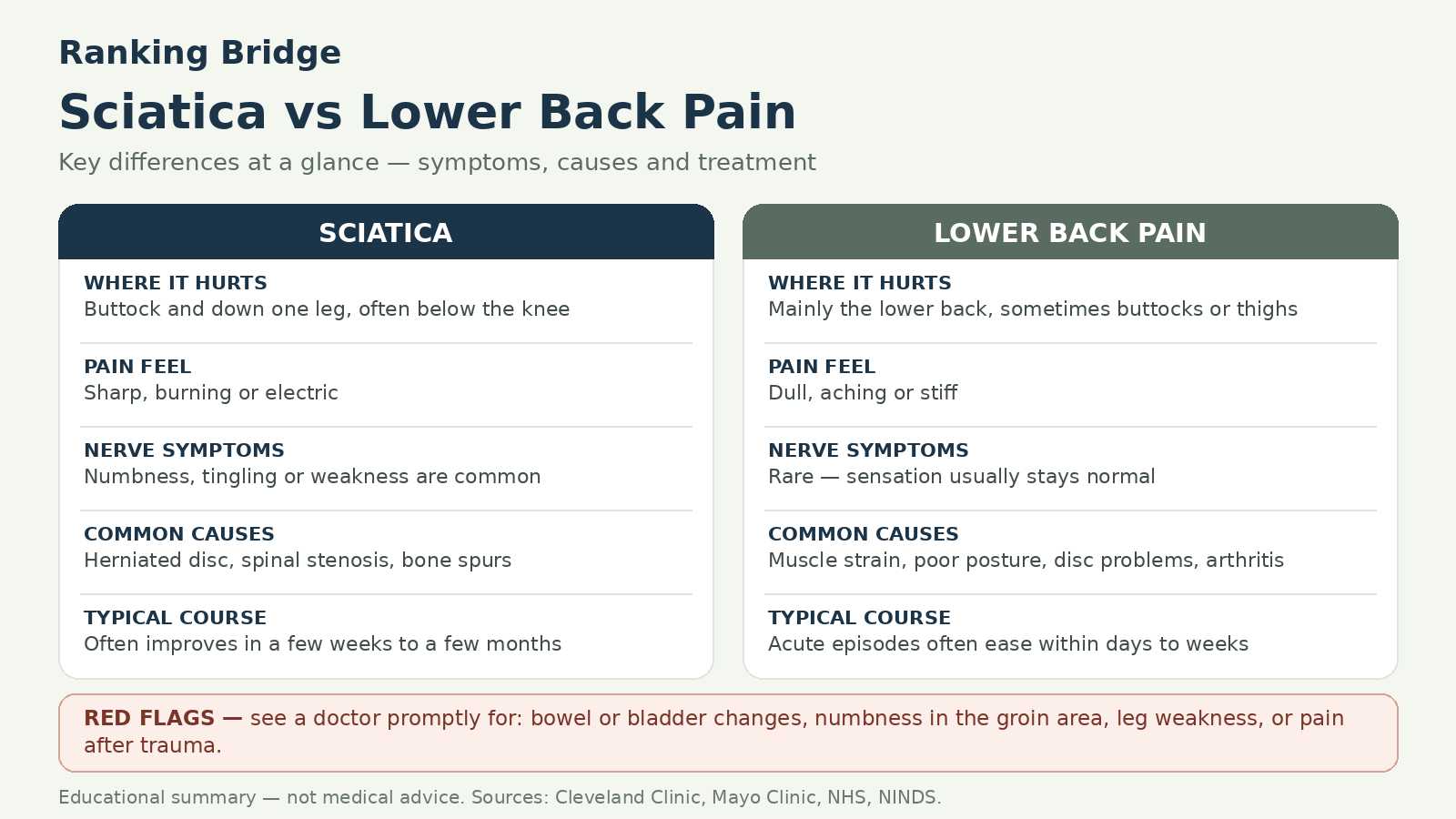
The table below sums up the main differences. After the table, each topic gets a closer look.
| Feature | Sciatica | Lower back pain |
|---|---|---|
| Where it hurts | Buttock and down one leg, often below the knee | Mainly the lower back, sometimes the buttocks or thighs |
| Pain quality | Sharp, burning, or electric | Dull, aching, or stiff |
| Nerve symptoms | Numbness, tingling, or weakness are common | Rare; sensation usually stays normal |
| Common causes | Herniated disc, spinal stenosis, bone spurs | Muscle strain, poor posture, disc problems, arthritis |
| Typical course | Often improves in a few weeks to a few months | Acute episodes often ease within days to weeks |
Causes
The causes of sciatica vs lower back pain differ in one important way. Sciatica always involves nerve irritation, while lower back pain can come from many structures in the back.
What causes sciatica?
A herniated disc causes most cases of sciatica. A disc is the soft cushion between two vertebrae. When its inner material pushes out, it can press on a nearby nerve root. The National Institute of Neurological Disorders and Stroke (NINDS) describes the result as shock-like or burning pain. It travels through the buttock and down one leg.
Other causes include spinal stenosis, a narrowing of the spinal canal that squeezes the nerves. Bone spurs from arthritis can press on a nerve root in the same way. In addition, a tight piriformis muscle deep in the buttock can irritate the sciatic nerve. A back injury can also trigger symptoms. More rarely, a tumor presses on the nerve. Mayo Clinic notes that a herniated disk or a bone overgrowth causes most cases.
What causes lower back pain?
Muscle strain is a common cause. Lifting a heavy object with poor form, twisting suddenly, or overusing the back muscles can overstretch them. Ligament sprains cause similar pain. Poor posture and long hours of sitting or standing add strain over time.
Disc problems also cause back pain. A disc can wear down with age or bulge out of place. Arthritis can inflame the joints of the spine, and thinning bones can lead to fractures. Bone and muscle health also depends on nutrients. For example, low vitamin D can weaken bones and muscles over time.
Diagnosis
A clinician usually starts with your history and a physical exam. The exam checks strength, reflexes, and sensation in the legs. It also checks how the pain changes when you move, sit, or lie down. That exam is often enough to separate sciatica vs lower back pain. Bring a clear account of when the pain started. Note what makes it better or worse, and whether you feel numbness or weakness. That detail helps a clinician narrow down the cause.
Imaging is not always necessary. A clinician may order an MRI or CT scan when symptoms are severe, persist, or suggest nerve compression. Imaging can show a herniated disc, stenosis, or another structural cause. For that reason, it helps most when the result would change the treatment plan.
Imaging can confirm a suspected cause. An MRI shows discs, nerves, and soft tissues in detail. A CT scan shows bone more clearly. Neither test is routine for a first episode of mild pain. A clinician orders one when symptoms are severe, persist, or point to a specific problem.
Other conditions can mimic sciatica. Hip joint problems and muscle injuries can cause similar leg pain. Nerve damage from diabetes can also cause tingling and numbness in the legs. Our guide to the early signs of diabetes explains what to watch for. A careful exam helps separate these causes.
Treatment options
Treatment for sciatica vs lower back pain starts the same way for most people. Most people improve with conservative care. The options below apply to both conditions, with some differences noted.
Self-care
Staying active helps more than bed rest. The NHS advises carrying on with normal activities as much as possible and doing regular gentle exercise. Short walks and gentle stretching can ease stiffness. Heat or cold packs can soothe sore muscles. In addition, over-the-counter anti-inflammatory painkillers can help some people. Ask a pharmacist which option suits you.
Avoid sitting or lying down for long periods. Change position often, and use a chair that supports your lower back. If pain flares after an activity, ease back and try again later. Small, regular movement usually works better than one long session.
Physical therapy
A physical therapist can design an exercise program for your specific problem. For sciatica, exercises aim to reduce pressure on the irritated nerve and improve spinal mobility. For back pain, the focus is core strength, flexibility, and posture. Manual therapy, such as massage, can help as part of a program that includes exercise. A therapist also teaches safe lifting and sitting habits. Small changes in how you move can take load off the spine. Over time, stronger core muscles support the back during daily tasks.
Medical treatments
When self-care and therapy are not enough, a clinician may suggest stronger options. Prescription medicines can calm nerve pain or inflammation. Corticosteroid injections can help when pain is severe. Surgery is rarely the first step. Surgeons usually consider it only when weakness is severe, you lose bowel or bladder control, or pain does not improve after other treatments.
When to see a doctor
Most back pain and sciatica improve with time and self-care. Still, some symptoms need prompt medical attention. See a clinician if pain has not improved after a few weeks of home treatment. Also seek care if pain is getting worse or stops you doing normal activities.
Seek urgent care for red-flag symptoms. These include bowel or bladder changes, numbness in the groin or genital area, and weakness or numbness in both legs. Sciatica on both sides also needs urgent evaluation. The same applies to pain after a serious fall or injury, and to severe pain with a fever.
These symptoms can signal a serious problem, such as cauda equina syndrome, in which several nerve roots face severe compression. That condition needs emergency hospital treatment. Early treatment can prevent lasting nerve damage. For that reason, do not wait if any red flag appears.
Frequently Asked Questions
Can lower back pain turn into sciatica?
Lower back pain does not turn into sciatica, but the two can share a cause. For example, a herniated disc can cause back pain and press on a nerve root at the same time. Sciatica means something irritates a nerve. Ordinary back pain usually means muscles, ligaments, or joints are the problem. A clinician can tell which pattern fits your symptoms.
How long does sciatica usually last?
Most cases improve within a few weeks to a few months. The NHS gives the same range, and notes that it can sometimes last longer. Cases caused by a herniated disc often clear up in a few weeks to months with treatment. If pain persists beyond that, a clinician should reassess it.
Is walking good for sciatica?
Walking often helps. Gentle movement keeps the back flexible and stops muscles from stiffening. The NHS advises staying active and avoiding long periods of sitting or lying down. Start with short walks and build up gradually. If walking makes pain worse, stop and seek advice.
Does sciatica always need surgery?
No. Most people recover with conservative care, such as exercise, physical therapy, and time. Surgery usually comes into play only when weakness is severe, you lose bowel or bladder control, or pain does not improve after other treatments.
Conclusion
The key difference between sciatica vs lower back pain is location and nerve involvement. Sciatica sends sharp, burning pain down one leg and often brings numbness or weakness. Lower back pain usually stays in the back and comes from muscles, joints, or discs. Most cases of both improve with time, movement, and conservative care. Still, red-flag symptoms need prompt attention. Pay attention to where the pain travels and whether numbness or weakness joins it. Those details matter more than the pain level alone. If you are unsure which pattern fits your pain, a clinician can help you sort it out.
This article is for education only. It is not a substitute for professional medical evaluation. If your pain is severe, worsening, or comes with any red-flag symptom above, seek care promptly.
