How to Prevent Acne Breakouts Naturally and Permanently
This voice experience is generated by AI.
Learning how to prevent acne breakouts naturally starts with a simple truth. Clear skin comes from steady habits, not quick fixes. Acne affects nearly 85% of people at some point in their lives, according to the American Academy of Dermatology. Most breakouts follow the same pattern, and the same daily steps help most people. This guide covers those steps in plain terms, using dermatology guidance rather than beauty trends.
One honest note comes first. No routine can promise that a breakout will never return. Hormones, genes and stress all play a part, and no habit controls them fully. What the habits below can do is keep pores clearer, calm inflammation and cut breakouts to a minimum. In other words, “permanently” means long-term clear skin from steady habits, not a one-time cure. For that reason, this guide also explains when home care is not enough and a dermatologist should take over.
Why breakouts happen
A breakout starts inside a hair follicle. The skin makes an oily substance called sebum, and dead skin cells shed into the same follicle. When excess oil and dead cells block the opening, bacteria can grow inside and cause inflammation and pus. As a result, a blackhead, whitehead or painful pimple appears. Hormones drive much of this process, since they control how much oil the skin makes. For example, hormone shifts during puberty, periods, pregnancy and menopause can all trigger breakouts. Certain medicines and greasy skin or hair products can add to the problem too.
Genes matter as well. Some people inherit skin that makes more oil or reacts more strongly to bacteria. That is why two people with the same routine can have very different skin. Breakouts appear most often on the face, chest and back, where oil glands are largest. Acne is most common in teenagers, yet many adults deal with it too, especially women around their menstrual cycle. Our guide to Acne: Causes, Treatment and Prevention explains each cause in full. Hormone-driven breakouts follow their own pattern, which our guide to hormonal acne covers in detail. The Cleveland Clinic explains how hormonal changes increase oil production and lead to clogged pores.
Daily habits that prevent acne breakouts naturally
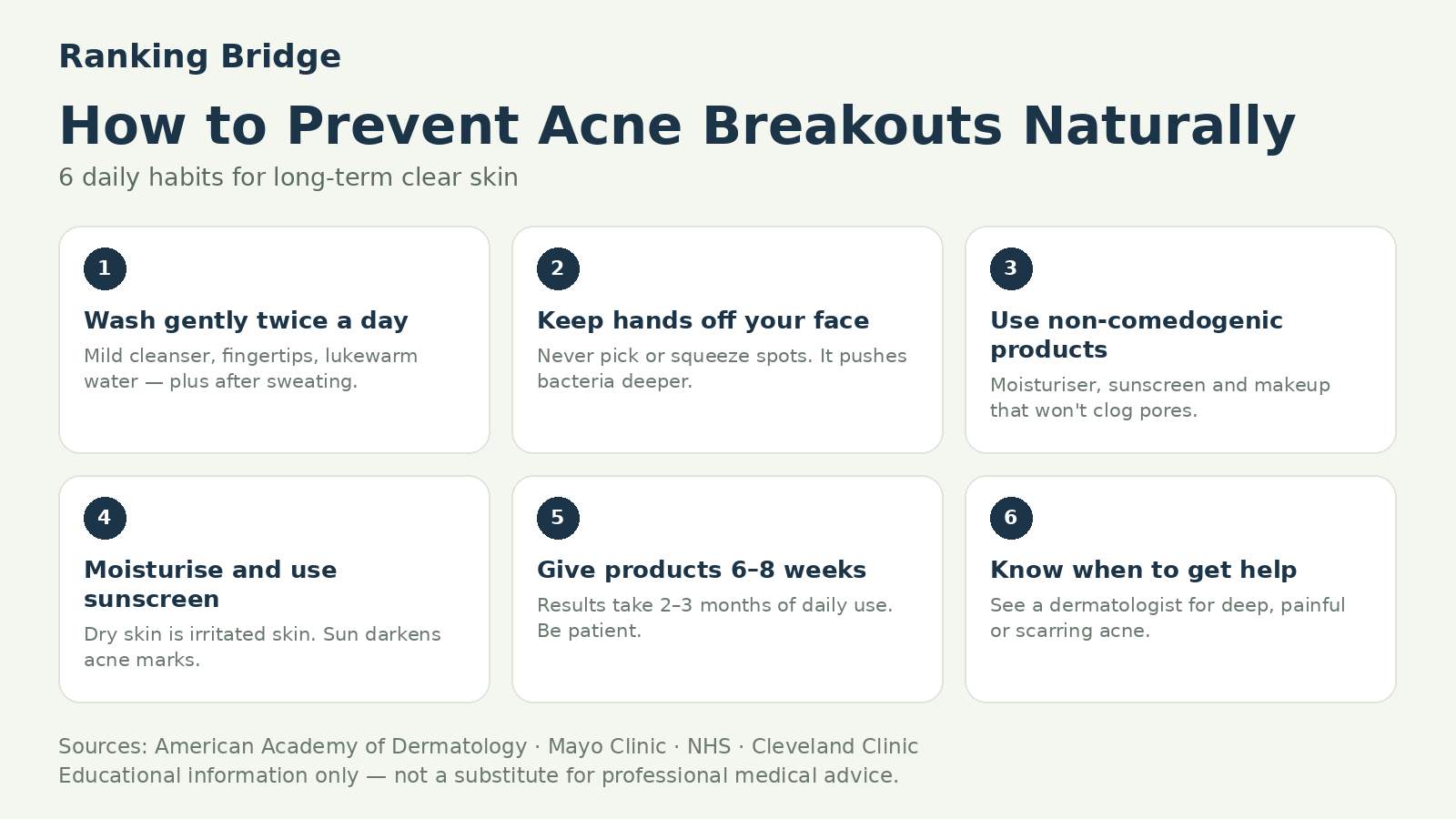
Wash your face gently twice a day, once in the morning and once before bed. Use a mild, non-abrasive cleanser with lukewarm water, and apply it with your fingertips. In addition, wash after sweating, since sweat and oil sitting on skin can lead to breakouts. Do not scrub. Scrubbing irritates skin and can make acne worse, and washing more than twice a day has the same effect. The American Academy of Dermatology shares the same advice in its acne treatment tips.
Moisturise every day, even if your skin feels oily. Dry skin is irritated skin, and irritated skin breaks out more easily. Choose a light, oil-free moisturiser labelled non-comedogenic, which means it will not clog pores. Similarly, pick sunscreen, makeup and hair products with the same label. Sun protection matters because sunlight darkens the marks acne leaves behind. In addition, some acne medicines make skin burn more easily, so daily sunscreen is part of prevention, not an extra.
Keep your hands off your face during the day. Touching transfers oil and bacteria from your fingers to your skin. Never pick or squeeze spots. Picking pushes pus, dead skin and bacteria deeper, which increases inflammation and raises the risk of scars. Meanwhile, watch what else touches your face. Keep hair clean and off your forehead, wipe your phone screen often, and change pillowcases regularly. Each of these collects oil and sweat that can end up on your skin. Finally, remove makeup before bed, and never share makeup, brushes or applicators. Even products labelled non-comedogenic can cause breakouts if you sleep in them.
Skincare ingredients that help prevent breakouts
Three ingredients carry most of the evidence for preventing breakouts. Benzoyl peroxide kills acne bacteria, removes excess oil and clears dead skin cells from pores. It comes without a prescription in strengths from 2.5% to 10%. Studies show lower strengths work as well as higher ones, so start with 2.5% to limit dryness and irritation. It can bleach hair and clothing. Salicylic acid works differently: it helps unclog pores and prevent new breakouts, and suits blackheads and whiteheads best. Shop products carry 0.5% to 2%, with mild stinging the most common side effect.
Retinoids are the third group. Adapalene gel (0.1%) is a retinoid sold without a prescription, and it unclogs pores and helps prevent new breakouts. Start slowly, a few nights a week, then build up. Do not use it on cut, sunburned or eczema-affected skin. Retinoids also make skin more sensitive to sunlight, which is another reason daily sunscreen matters. Azelaic acid is a gentler option. It helps prevent plugged pores, is mildly antibacterial, and can fade the dark marks acne leaves behind.
How you use these products matters as much as which one you pick. Start with one product, not three at once. Apply a thin layer over the whole acne-prone area, not just on visible spots. That is how new breakouts get prevented. If you use two products, try one in the morning and the other at night to limit irritation. Most importantly, give the product time. The AAD advises using a product for 6 to 8 weeks before judging it. Mayo Clinic notes it may take 2 to 3 months of daily use to see results. Acne may even look worse before it improves, so patience is part of the treatment.
Diet and lifestyle
Food affects acne less than many people think, and the evidence is still developing. The American Academy of Dermatology says foods that raise blood sugar quickly may worsen acne. White bread and fries are examples, yet the evidence is limited and more research is needed. Small studies suggest a low-glycaemic diet may reduce breakouts. On dairy, some studies link cow’s milk to acne. No studies have found that yoghurt or cheese lead to more breakouts. In short, diet may matter for some people, but no single food has been shown to cause acne. A balanced diet with plenty of fruit, vegetables and whole grains is still a good base. It also helps to boost your immune system naturally.
Stress and sleep play a smaller but real role. Stress cannot cause acne on its own, yet the AAD notes it may worsen acne that already exists. Similarly, too little sleep is listed among the things that can make acne worse. For that reason, regular sleep and simple stress relief, such as walking or time away from screens, support clearer skin. Exercise helps too, as long as sweat does not sit on skin afterwards. Shower after a workout, and wear loose, breathable clothing if acne appears on the chest or back. Overall, lifestyle changes will not replace treatment, but they remove several triggers at once. Together with gentle skincare, they help you prevent acne breakouts naturally.
What does not work: acne myths
The myth that dirty skin causes acne does the most harm. Acne starts inside the follicle, through oil, dead cells, bacteria and hormones, not from surface dirt. Washing harder or scrubbing more cannot reach the cause, and the NHS warns that scrubbing irritates skin and can make acne worse. The chocolate myth is similar. Chocolate and greasy food have not been shown to cause acne, even though high-sugar diets and milk show a possible link for some people. Cutting out one food rarely clears skin on its own.
Sunlight is another false friend. A tan may hide redness for a week, but tanning damages skin and can worsen acne over time. In addition, sunlight darkens the marks that breakouts leave behind. Popping spots is equally unhelpful. It feels like progress, yet it pushes bacteria deeper and raises the risk of infection and scarring. DIY tricks cause the same problem in a different way. The AAD notes there is not enough evidence to support chamomile tea as an acne treatment, for example. Harsh home mixtures can irritate skin and trigger more breakouts. Finally, “natural” on a label does not mean safe for acne-prone skin. Some plant oils and natural butters clog pores, so check for “non-comedogenic” rather than trusting the word natural alone. To prevent acne breakouts naturally, judge products by evidence, not labels. The AAD explains which DIY acne tricks help and which can make things worse.
When to see a dermatologist
Home care handles mild acne well, but some breakouts need professional help. See a doctor or dermatologist if your skin has not improved after 2 to 3 months of a steady routine with over-the-counter products. Deep, painful lumps under the skin also need professional care, since they carry the highest risk of scarring. The NHS advises seeing a GP if spots are deep, painful or causing scars. The same advice applies if there are signs of skin infection, such as hot, swollen and red skin, or if acne is affecting your mental health.
A dermatologist can offer stronger options than shop products. These include prescription retinoids, topical or oral antibiotics, hormonal treatments for some women, and isotretinoin for severe or scarring acne. Acne can affect mood and confidence as well as skin. The NHS notes it can cause anxiety, depression and low self-esteem, so breakouts that affect how you feel day to day are reason enough to seek help. Early treatment is the best way to avoid lasting marks, and our guide to removing acne scars explains what helps once marks have formed. There is no prize for waiting. Acne is very treatable, and getting help early protects both skin and confidence.
Frequently Asked Questions
Can acne be prevented permanently?
No method guarantees zero breakouts for life. Hormones and genes sit outside your control, so an occasional spot can still appear. However, steady habits can keep skin clear for long stretches and cut breakouts to a minimum. That is the realistic meaning of permanent prevention when you prevent acne breakouts naturally: fewer breakouts, milder ones, and long clear periods. If breakouts stay frequent or severe despite good habits, a dermatologist can add prescription treatment.
How long does it take to see results?
Give any new product at least 6 to 8 weeks. The AAD advises that long to see some improvement, while Mayo Clinic notes 2 to 3 months of daily use before results show. Complete clearing generally takes 3 to 4 months. Switching products every week irritates skin and restarts the clock, so patience matters more than variety.
Does diet really affect acne?
The link is suggestive, not settled. High-glycaemic foods and cow’s milk show a possible link in some studies, but the evidence is limited and no single food has been shown to cause acne. Chocolate and greasy food have not been shown to cause breakouts. A balanced diet supports overall skin health, yet diet alone rarely clears acne.
Should I stop wearing makeup?
No, you do not need to give up makeup. Choose products labelled non-comedogenic, remove makeup before bed, and wash brushes often. Sleeping in makeup can clog pores even when the product itself is non-comedogenic. If a product seems to trigger breakouts, stop using it and see whether your skin settles.
Conclusion
To prevent acne breakouts naturally, build habits you can keep every day. Wash gently twice a day, moisturise, use sunscreen, keep hands and hair off your face, and give proven ingredients time to work. Eat well, sleep enough, and ignore the myths that promise fast results. These steps will not guarantee a lifetime without a single spot, but they give your skin the best chance of staying clear for the long term. If breakouts persist, grow painful or leave scars, see a dermatologist. Clear skin is a long game, and the right help makes it winnable.
This article is educational only and is not a substitute for professional medical advice. If acne is severe, painful or affecting your mood, speak to a pharmacist, your GP or a dermatologist.
