10 Early Signs of Mental Health Problems You Should Never Ignore
This voice experience is generated by AI.
Knowing the early signs of mental health problems can change the course of a difficult year. Mental health conditions often start quietly, with small changes in mood, sleep, energy, or behaviour. In addition, those changes are easy to dismiss as stress, tiredness, or a busy season. As a result, many people wait months before they ask for help.
Mental illness is far more common than most people think. The National Institute of Mental Health (NIMH) reports that more than one in five U.S. adults live with a mental illness. In 2022, that meant 59.3 million people, or 23.1% of all U.S. adults. In addition, only about half of those adults received mental health treatment in the past year. That gap matters. The Mayo Clinic notes that most mental illnesses do not improve on their own. Without treatment, they may get worse over time and cause serious problems.
A single bad day is not a warning sign. Instead, the early signs of mental health problems are changes from a person’s usual self. Those changes last, and they start to affect daily life. For example, low mood that lingers for two weeks matters more than one sad afternoon. Similarly, a few restless nights differ from weeks of broken sleep. Overall, the pattern matters more than any single moment.
This guide explains ten early signs, what each one looks like, and when to seek help. It draws on guidance from the National Institute of Mental Health and the Mayo Clinic. However, it cannot diagnose anyone, and it is not a substitute for professional evaluation. If several signs below sound familiar, consider talking with a health care provider.
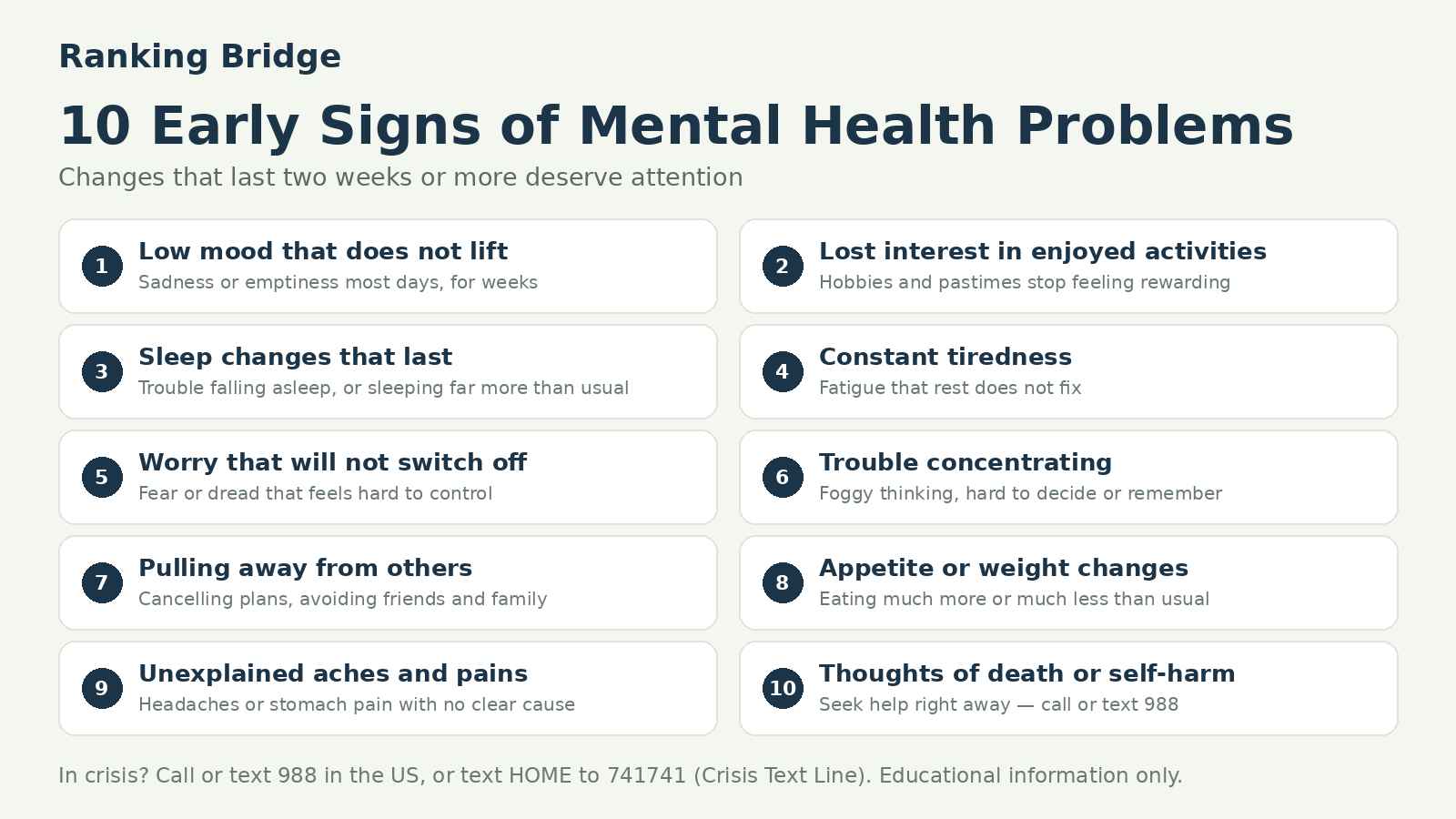
10 early signs of mental health problems
The ten signs below come from symptom lists published by the Mayo Clinic and NIMH. Learning the early signs of mental health problems helps you act sooner rather than later. Each one describes a change that lasts, not a passing mood. Read them as prompts to pay attention, not as a checklist for self-diagnosis.
1. A low mood that does not lift
Everyone feels sad sometimes, often after a loss or a setback. Sadness usually lifts as days pass and life moves on. A low mood becomes a warning sign when it stays most of the day, nearly every day. NIMH uses two weeks as the marker for depression. The National Institute of Mental Health lists a persistent sad, anxious, or “empty” mood among the common signs of depression. In addition, feelings of hopelessness or pessimism often sit alongside that low mood.
For example, the mood may show up as tearfulness, or as a flat feeling with little emotion at all. Some people describe it as heaviness, or as watching life from behind glass. Either way, the key detail is duration. A mood that will not lift deserves attention, even when life looks fine from the outside.
2. Losing interest in things you once enjoyed
Hobbies, sports, music, or time with friends used to bring pleasure. Then, slowly, those activities stop feeling rewarding. The National Institute of Mental Health lists loss of interest or pleasure in hobbies and activities among the common signs of depression. In addition, the change often creeps in so slowly that friends notice it first.
A person may still go through the motions yet feel nothing during them. For example, a weekly game night becomes a chore, or a favourite show plays to an empty room. Meanwhile, the effort of starting an activity can feel larger than the activity itself. When pleasure fades across many parts of life, not just one, the pattern deserves attention.
3. Sleep changes that last
Sleep often changes first when mental health slips. Some people lie awake for hours, wake too early, or sleep in broken patches. Others sleep far more than usual yet still wake up tired. The National Institute of Mental Health lists difficulty sleeping, early waking, and oversleeping among the common signs of depression.
Short-term sleep trouble is common, and it often follows stress or illness. However, sleep changes that last for weeks point to something deeper. In addition, poor sleep and low mood feed each other, so each one makes the other harder to fix. For a closer look at lasting sleep trouble, see our guide to insomnia causes, symptoms and treatment. If sleep has changed sharply and stays changed, mention it to a health care provider.
4. Constant tiredness or low energy
Fatigue that rest does not fix is a common early sign. A person may sleep a full night and still wake up exhausted. In addition, simple tasks such as cooking, showering, or answering messages can feel draining. The National Institute of Mental Health lists fatigue and lack of energy among the common signs of depression.
This tiredness differs from the ache after a hard day. Normal tiredness fades with rest, while this fatigue stays. As a result, people often cut back on work, exercise, and social plans, which can deepen the low mood. When tiredness lasts for weeks without a clear cause, a health care provider can check for both physical and mental health causes.
5. Worry or fear that will not switch off
Everyone worries, and worry often helps people prepare for real problems. Worry becomes a warning sign when it feels excessive, hard to control, and out of proportion to the situation. The Mayo Clinic lists excessive fears or worries among the signs of mental illness. In addition, the worry may jump from topic to topic, so settling one fear simply starts another.
Physical signs often come with it, such as a racing heart, tense muscles, or a knotted stomach. Meanwhile, the worry can make sleep harder and concentration weaker. When fear starts to shape daily choices, such as avoiding places, calls, or decisions, it deserves attention rather than dismissal.
6. Trouble concentrating or making decisions
Foggy thinking is easy to blame on a busy life. Yet trouble concentrating is a recognised early sign of mental health problems. The Mayo Clinic lists confused thinking and reduced ability to concentrate among the signs of mental illness. In addition, the National Institute of Mental Health lists difficulty concentrating, remembering, or making decisions among the signs of depression.
The change often shows up at work or school first. For example, a person may read the same page three times, lose track of conversations, or struggle over small choices. As a result, tasks take longer, mistakes increase, and confidence drops. When focus stays poor for weeks, it is worth raising with a health care provider.
7. Pulling away from friends and family
Withdrawing from people is one of the clearest early signs. A person may cancel plans, stop answering messages, or avoid gatherings they once enjoyed. The Mayo Clinic lists withdrawal from friends and activities among the signs of mental illness. In addition, the withdrawal often grows slowly, so it can look like simple busyness at first.
Isolation then makes things worse, because connection protects mental health. Meanwhile, friends and family may pull back too, unsure how to help. That distance can deepen loneliness and low mood. If someone you know has gone quiet for weeks, reaching out with patience can matter more than advice.
8. Big changes in appetite or weight
Appetite often shifts when mental health slips. Some people lose interest in food and skip meals without noticing. Others eat far more than usual, often for comfort rather than hunger. The National Institute of Mental Health lists changes in appetite and unplanned weight changes among the common signs of depression.
Either direction matters when the change is large or lasts for weeks. For example, clothes fitting differently, or meals becoming an afterthought, can signal a deeper change. In addition, appetite changes often travel with sleep and energy changes. Unplanned weight loss or gain is always worth mentioning to a health care provider, whatever the cause.
9. Unexplained aches and pains
Mental health problems often show up in the body. The Mayo Clinic notes that symptoms sometimes appear as stomach pain, back pain, headaches, or other unexplained aches and pains. In addition, the National Institute of Mental Health lists aches, headaches, cramps, and digestive problems without a clear physical cause among the signs of depression.
These pains are real, even when tests find no injury or illness. For example, tension headaches, a churning stomach, or a sore back can all track with stress and low mood. As a result, people may chase physical treatments while the underlying cause goes unaddressed. Our guide to lower back pain causes and treatment covers one common complaint in detail. When pain lingers without a clear cause, mention mood and stress to the clinician as well.
10. Thoughts of death or self-harm
Thoughts of death or self-harm are the most urgent sign on this list. They may arrive as a wish to disappear, a feeling of being a burden, or thoughts of harming yourself. The Mayo Clinic lists suicidal thinking among the signs of mental illness. In addition, the National Institute of Mental Health lists thoughts of death or suicide among the signs of depression.
These thoughts deserve help right away, not waiting to see if they pass. In the United States, call or text 988 to reach the 988 Suicide and Crisis Lifeline, free and confidential around the clock. You can also text HOME to 741741 to reach the Crisis Text Line. If someone may act on these thoughts, call 911 or go to the nearest emergency department.
When to seek help
Two questions help decide when to seek help: how long have the signs lasted, and how much do they affect daily life? The National Institute of Mental Health advises talking with a health care provider when symptoms last most of the day, nearly every day, for at least two weeks. In addition, any sign that interferes with work, relationships, sleep, or self-care is worth raising sooner.
A primary care provider is a good first step. The Mayo Clinic advises seeing a primary care provider or a mental health professional when any signs of mental illness appear. A clinician can listen, check for physical causes, and refer to a psychologist, psychiatrist, or counsellor when needed. For example, NIMH notes that some medications and medical conditions, such as thyroid disorders, can cause the same symptoms as depression.
Other signs also call for prompt help. Extreme mood swings, anger that feels out of control, drinking or using drugs more to cope, and seeing or hearing things others do not all appear on the Mayo Clinic’s list of mental illness signs. Finally, trust the people around you: if family or friends say they are worried, take that seriously.
If you or someone near you is in crisis, help is available right now. In the United States, call or text 988 to reach the 988 Suicide and Crisis Lifeline, free and confidential, 24 hours a day. You can also text HOME to 741741 to reach the Crisis Text Line. For immediate danger, call 911.
Frequently Asked Questions
How can I tell a rough patch from a mental health problem?
Time, impact, and number of signs are the best guides. A rough patch usually follows a clear cause and eases within days or weeks. In contrast, a mental health problem brings several signs that last most of the day, nearly every day, for two weeks or more. In addition, the signs start to affect work, relationships, sleep, or self-care. When in doubt, a health care provider can help sort out what is happening.
Can physical health problems cause these signs?
Yes. The National Institute of Mental Health notes that some medications and medical conditions, such as thyroid disorders, can cause the same symptoms as depression. In addition, viruses and other health conditions can affect mood, sleep, and energy in similar ways. That is one reason a clinician usually checks for physical causes as well. Mention all medicines and health conditions at the appointment.
What should I do if someone I care about shows these signs?
Start by listening without judgement. Ask how they have been feeling, and let them talk without rushing to fix anything. In addition, encourage them to speak with a health care provider, and offer practical help such as finding a clinician or going with them. Avoid diagnosing them or dismissing what they describe. If they talk about harming themselves, take it seriously and help them reach support right away.
Do I need a specialist, or can my regular doctor help?
Your regular doctor is a fine place to start. The Mayo Clinic advises seeing a primary care provider or a mental health professional when any signs of mental illness appear. In addition, a primary care provider can check for physical causes, discuss next steps, and refer you to a psychologist, psychiatrist, or counsellor. Many people begin with their usual clinician and move to specialist care only when needed.
Conclusion
The early signs of mental health problems are easy to miss, because they often look like ordinary stress or tiredness. Yet duration and impact set them apart: signs that last for weeks and affect daily life deserve attention. In addition, the Mayo Clinic notes that untreated symptoms may get worse over time, so raising them early is wise.
If several of these early signs of mental health problems sound familiar, consider talking with a health care provider. You do not need a diagnosis to ask for help, and you do not need to wait for a crisis. Finally, if someone you know seems to be struggling, reaching out with patience can be the first step toward support.
