What Is I-STOP in Simple Terms?
I-STOP stands for the Internet System for Tracking Over-Prescribing. It is the name given to New York State’s prescription monitoring reforms, built around the state’s Prescription Monitoring Program (PMP) Registry.
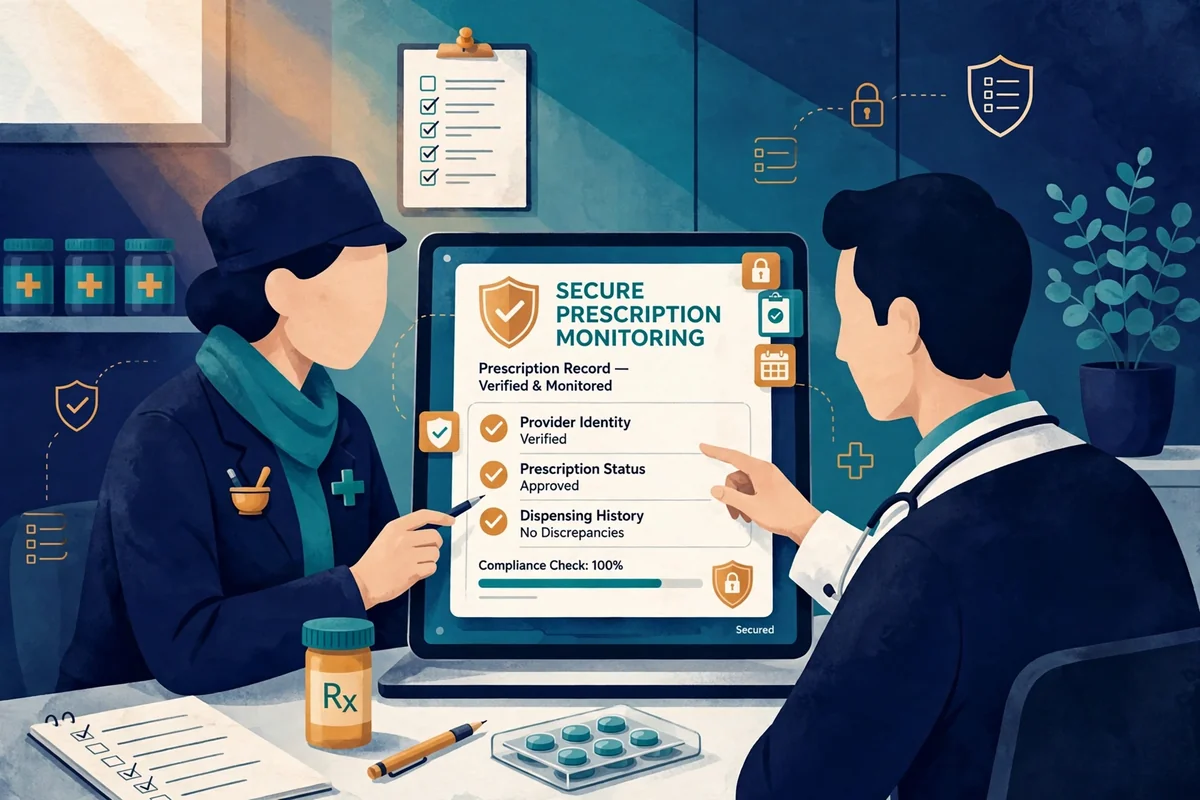
In plain language, I-STOP is not a single app a patient downloads. It is a system that lets prescribers and pharmacists see a patient’s recent controlled-substance dispensing history before a new prescription is written or filled. The goal is straightforward: give clinicians better information, reduce “doctor shopping,” and make it harder for controlled substances to be obtained illegally, while still supporting legitimate patient care.
If you work in healthcare administration, billing, or compliance, I-STOP matters for another reason too. Prescribing workflows, documentation, and claim integrity are all connected. When a controlled-substance prescription is not properly checked and documented, the downstream problems are not only clinical — they can become compliance, audit, and revenue cycle problems as well.
How the New York PMP Registry Works
The New York State Department of Health runs the PMP Registry, which is available through the Health Commerce System (HCS), 24 hours a day, seven days a week.
A patient report generally includes controlled substances dispensed in New York State and reported by pharmacies or other dispensers for the preceding year. That history helps a prescriber answer practical questions before writing a prescription:
- Has this patient recently received similar controlled substances from another prescriber?
- Are there overlapping prescriptions that could increase risk?
- Does the current request fit the documented clinical picture?
The registry is a tool for clinical judgment, not a replacement for it. A report on its own does not decide whether a prescription is appropriate. The prescriber still has to weigh diagnosis, treatment history, risk factors, and the patient’s own account.
Who Must Consult the PMP Registry?
Since August 27, 2013, most prescribers in New York have been required to consult the PMP Registry when writing prescriptions for Schedule II, III, and IV controlled substances. Pharmacists in New York also have access to the registry.
There are exceptions in specific circumstances, and the rules around designees, documentation, and timing matter in day-to-day practice. As a general workflow principle, practices should:
- Check the registry before prescribing a qualifying controlled substance.
- Document the consultation, or the applicable exception, in the patient’s medical chart.
- Keep that documentation consistent, so it can be found later during an audit or review.
Practices that treat this as a “check the box” step tend to struggle. Practices that build it into the normal prescribing workflow — with clear roles for prescribers and authorised designees — tend to be more consistent.
What I-STOP Changed Beyond the Registry Check
I-STOP was a broader reform package, not just a registry lookup. Alongside the modernised PMP Registry, it included measures such as electronic prescribing requirements and a safe disposal programme for unused medications, both aimed at closing gaps in how controlled substances move from prescriber to patient.
For revenue cycle and operations teams, the lesson is familiar: a single clinical step often touches several systems. A prescription that is e-prescribed, checked, documented, and dispensed cleanly is far easier to defend — and to bill for — than one where any of those steps is missing or inconsistent.
Common I-STOP Mistakes Practices Should Avoid
Checking Too Late, or Not at All
The check is most useful before the prescription is written, not after. Build it into the visit workflow so it happens at the right point, every time.
Poor Documentation
If the consultation is not recorded in the chart, it is difficult to prove later. A brief, standard note is better than a detailed note that only some clinicians write.
Treating the Registry as a Verdict
A PMP report shows dispensing history. It does not show intent, and it does not replace a clinical conversation. Use it to inform care, and to have honest conversations with patients about risks, alternatives, and safe use.
Ignoring the Billing and Compliance Link
Controlled-substance prescribing sits at the intersection of clinical care, compliance, and payment. When documentation is incomplete, denials, audits, and compliance reviews become more likely. Strong front-end documentation protects revenue on the back end.
I-STOP, Denial Management, and the Revenue Cycle
This is where I-STOP connects directly to revenue cycle management. A claim is only as strong as the documentation behind it. If a service, prescription, or visit is poorly documented, payers and auditors have an easy reason to question it.
That is why practices that invest in clean prescribing workflows often see benefits beyond patient safety: fewer documentation gaps, fewer avoidable denials, and smoother follow-up when a claim is questioned. For background on how denials are handled once they occur, see our guide to denial management in medical billing, and for the wider revenue cycle picture, start with What Is RCM in Healthcare?.
A Simple I-STOP Workflow Checklist
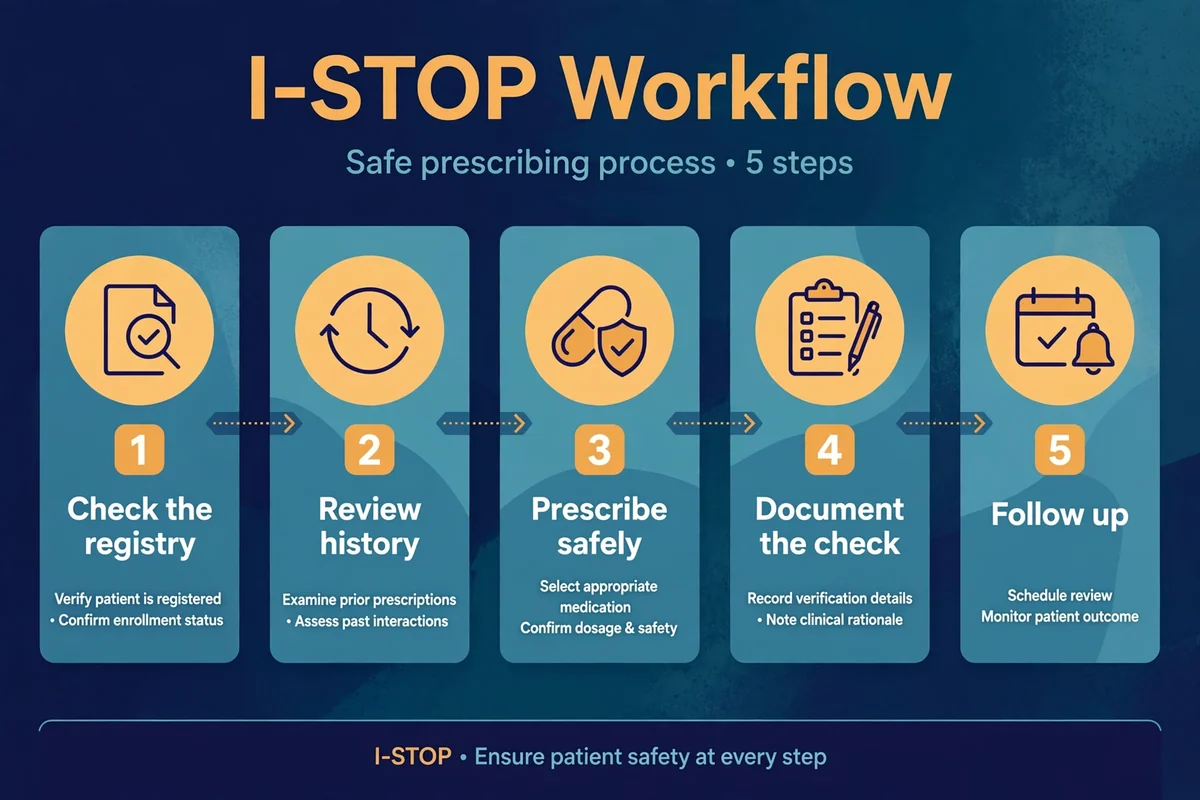
- Confirm whether the prescription is for a Schedule II, III, or IV controlled substance.
- Consult the PMP Registry through the Health Commerce System before prescribing.
- Review the past-year dispensing history and consider it alongside the clinical picture.
- Document the consultation, or the applicable exception, in the patient’s chart.
- E-prescribe where required, and keep the prescription record consistent with the chart.
- Flag overlapping prescriptions or unusual patterns for clinical review, not automatic refusal.
- Review the workflow regularly, including designee access and training for new staff.
Frequently Asked Questions About I-STOP
Is I-STOP the same as the PMP Registry?
They are closely related, and people often use the terms interchangeably. I-STOP is the name of New York’s reform initiative; the PMP Registry is the secure system prescribers and pharmacists use to review dispensing histories.
Does I-STOP apply outside New York?
No. I-STOP is a New York programme. Other states have their own prescription drug monitoring programmes, with different rules, access systems, and consultation requirements.
Does a PMP check replace clinical judgment?
No. It provides additional information. The prescriber still decides what is clinically appropriate for the individual patient.
Why should billing teams care about I-STOP?
Because documentation drives payment. Clean, consistent prescribing documentation supports clean claims, reduces denial risk, and makes audits far less painful.
The Bottom Line
I-STOP is best understood as a safety and accountability system, not just a database. It gives prescribers and pharmacists a fuller picture before a controlled substance is prescribed or dispensed, and it creates a documentation trail that protects patients, clinicians, and practices alike.
For healthcare organisations, the practical takeaway is simple: make the PMP check a normal, documented part of prescribing, connect it to your wider compliance and revenue cycle workflows, and review it as regularly as you would any other part of your billing process.
Further reading on Ranking Bridge:
- What Is Revenue Cycle Management in Healthcare?
- What Is Denial Management in Medical Billing?
- What Is Insurance Verification in Healthcare?
- What Is an EMR? The Definitive Guide to Electronic Medical Record Systems
Authoritative sources:
- New York State Department of Health, PMP/I-STOP programme information: https://www.health.ny.gov/professionals/narcotic/prescription_monitoring/
This article is general information about a healthcare programme and workflow. It is not medical, legal, or compliance advice. Prescribers and practices should check current New York State requirements and their own organisational policies.