
Search intent is the reason behind a search. Two people can type similar words into Google and want completely different things. If your page does not match what they actually want, it will not rank well, even if it contains the right keywords.
This guide explains the main types of search intent, with examples, and how to match your content to each one.
The 4 main types of search intent
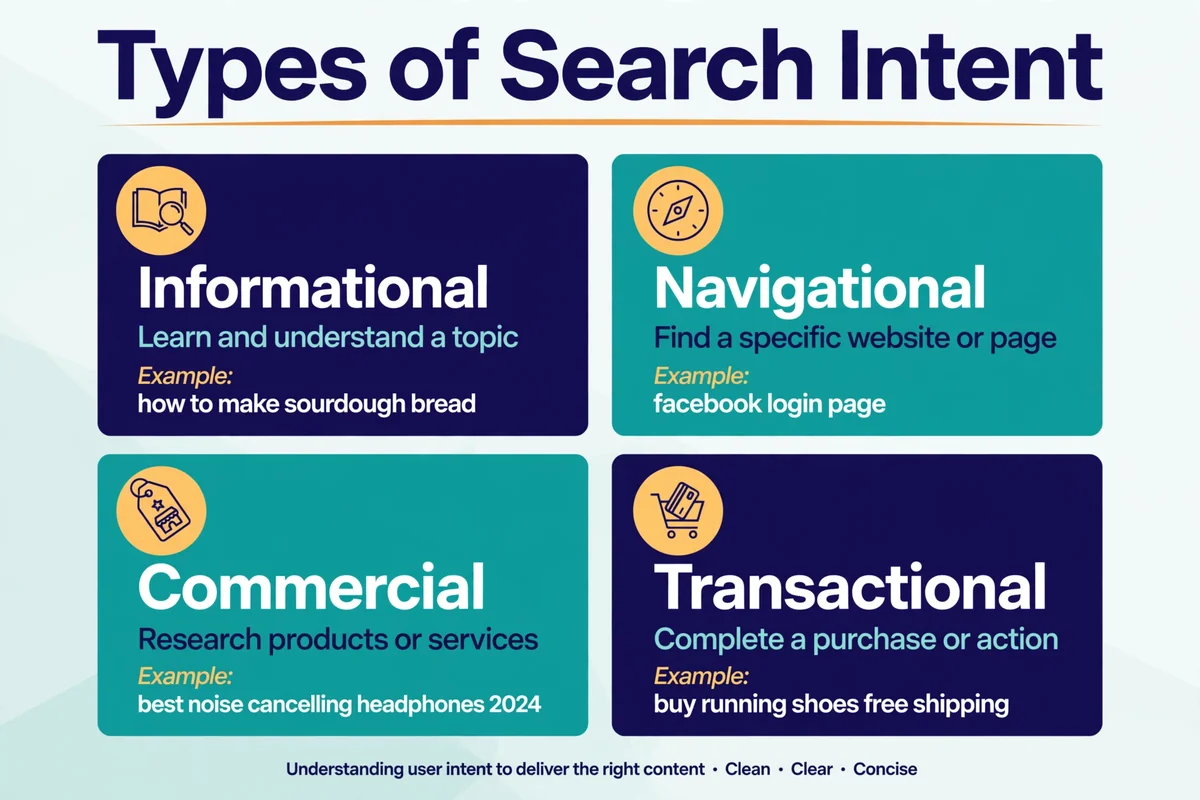
1. Informational intent: “I want to learn”
The searcher wants an answer, an explanation, or a how-to.
Examples:
- “what is SEO”
- “how do search engines work”
- “types of SEO”
What works: clear explanations, definitions, steps, examples, and FAQs. Do not try to sell in the first paragraph. Teach first.
Related: What Is SEO – Search Engine Optimization?
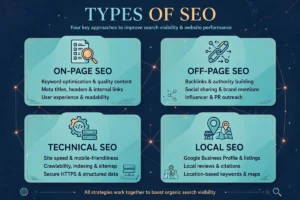
And: Types of SEO: On-Page, Off-Page, Technical, Local
2. Navigational intent: “I want to go to a specific site or page”
The searcher already knows where they want to go and is using search as a shortcut.
Examples:
- “Ranking Bridge write for us”
- “Google Search Console login”
- “Yoast SEO plugin”
What works: a clear brand or product page, with the name in the title, and easy navigation. Do not try to outrank a brand’s own site for its own name unless you are that brand.
3. Transactional intent: “I want to do or buy something”
The searcher is ready to act: buy, sign up, download, book, or submit.
Examples:
- “buy SEO tool”
- “submit guest post”
- “book SEO audit”
What works: a clear offer, pricing or next step, trust signals, and a simple form or checkout. Long educational introductions will frustrate this reader.
See our Write for Us page for an example of a transactional page done clearly: https://rankingbridge.com/write-for-us/
4. Commercial investigation intent: “I want to compare before I decide”
This is often grouped with transactional intent, but it is worth separating. The searcher is close to deciding, but still comparing options.
Examples:
- “best SEO tools for beginners”
- “Ahrefs vs Semrush”
- “top guest posting sites”
What works: honest comparisons, pros and cons, pricing, and who each option is best for. Avoid one-sided lists that only promote one product.
Related: Best Free SEO Tools for Beginners in 2026
Why intent matters more than keywords alone
Google’s SEO Starter Guide notes that SEO is about helping search engines understand your content and helping users find your site and decide whether to visit it. That decision depends on intent. A page that matches intent will get clicks, longer visits, and more conversions. A page that does not will get quick bounces, even if it ranks briefly.
Read the guide here: Google Search Central, SEO Starter Guide
How to identify intent before you write
Ask three questions about the keyword:
- What would a satisfied searcher do after reading this page? Learn, go somewhere, compare, or buy?
- What kind of pages already rank for it? Guides, product pages, lists, or homepages? That is a strong clue.
- What words modify the keyword? “How to” and “what is” usually signal informational intent. “Best,” “review,” and “vs” usually signal commercial investigation. “Buy,” “price,” and “sign up” usually signal transactional intent.
If the top results are mostly guides, do not try to rank a sales page for that keyword. Match the format that already satisfies searchers, then make yours better.
Matching content to intent: a quick checklist
- Informational: start with a direct answer, then explain in depth, with headings and examples.
- Navigational: use the exact brand or product name, and make the destination obvious.
- Commercial: compare fairly, show prices and differences, and end with a clear recommendation for different needs.
- Transactional: put the offer and next step near the top, remove friction, and answer objections briefly.
Also match the title and meta description to intent. An informational title should promise learning. A transactional title should promise action. Misleading titles hurt clicks and trust.
Common mistakes
- Writing a sales page for an informational keyword, or a long guide for a transactional keyword.
- Targeting the same keyword with two pages that have different intents, which can cause them to compete with each other.
- Ignoring the search results page itself. The results tell you what Google already thinks searchers want.