

Keyword research is the foundation of any successful SEO strategy. Choosing the right keywords helps your website rank higher on Google, drives organic traffic, and attracts the right audience. In this guide, we’ll walk you through a step-by-step process for doing keyword research effectively, using high-volume and long-tail keywords to boost your SEO results.
Step 1: Understand Your Niche and Audience
Before diving into keyword research, it’s essential to understand your target audience. Ask questions like:
- What problems are they trying to solve?
- What terms do they use when searching online?
- Which topics generate the most interest in your niche?
High-volume keywords to consider:
- SEO tips
- Digital marketing strategies
- How to rank on Google
Knowing your audience ensures your keywords align with their search intent.
Step 2: Brainstorm Seed Keywords
Seed keywords are the basic terms related to your topic. Start by listing broad keywords that describe your business, products, or services.
Examples of seed keywords:
- SEO tools
- Keyword research
- On-page SEO
- Content marketing
Seed keywords will serve as a foundation to generate more specific long-tail keywords that attract targeted traffic.
Step 3: Use Keyword Research Tools
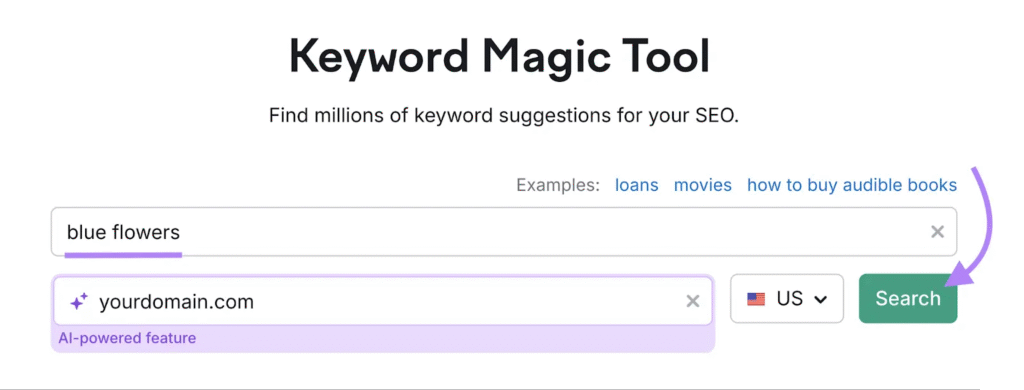
Keyword research tools help you discover keywords with high search volume, low competition, and relevant intent. Some popular tools include:
- Google Keyword Planner – Free tool to find search volume and keyword ideas
- Ahrefs – Provides keyword difficulty, search volume, and competitor analysis
- SEMrush – Offers keyword suggestions and SEO analytics
- Ubersuggest – Good for discovering long-tail keywords
- AnswerThePublic – Helps identify questions and queries around a topic
High-volume keywords to explore:
- Best SEO tools 2025
- How to do keyword research
- SEO for beginners
- SEO techniques
Step 4: Analyze Search Intent
Understanding search intent is critical for ranking on Google. There are four main types:
- Informational – Users want to learn something (e.g., “how to do keyword research”)
- Navigational – Users are looking for a specific website or brand
- Transactional – Users want to buy something (e.g., “buy SEO tools online”)
- Commercial Investigation – Users are comparing products or services
Target keywords with the right intent to ensure your content matches what users are searching for.
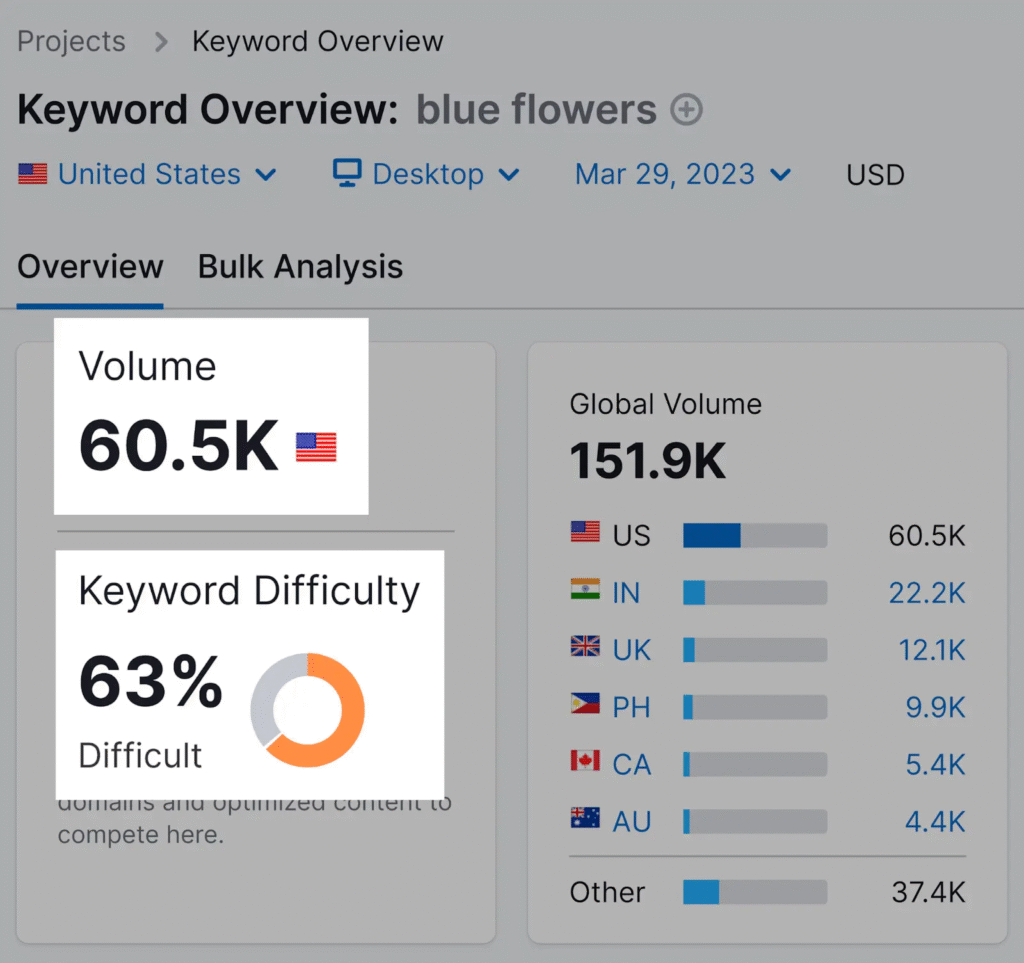
Step 5: Check Keyword Difficulty and Competition
Not all high-volume keywords are easy to rank for. Tools like Ahrefs, SEMrush, and Moz provide keyword difficulty scores, showing how competitive a keyword is.
Tips:
- Focus on low to medium difficulty keywords for faster ranking
- Use long-tail keywords for niche targeting and better conversion rates
Examples of long-tail keywords:
- How to do keyword research for SEO in 2025
- Best free keyword research tools for small businesses
- Step-by-step guide to SEO keyword research
Step 6: Analyze Competitor Keywords
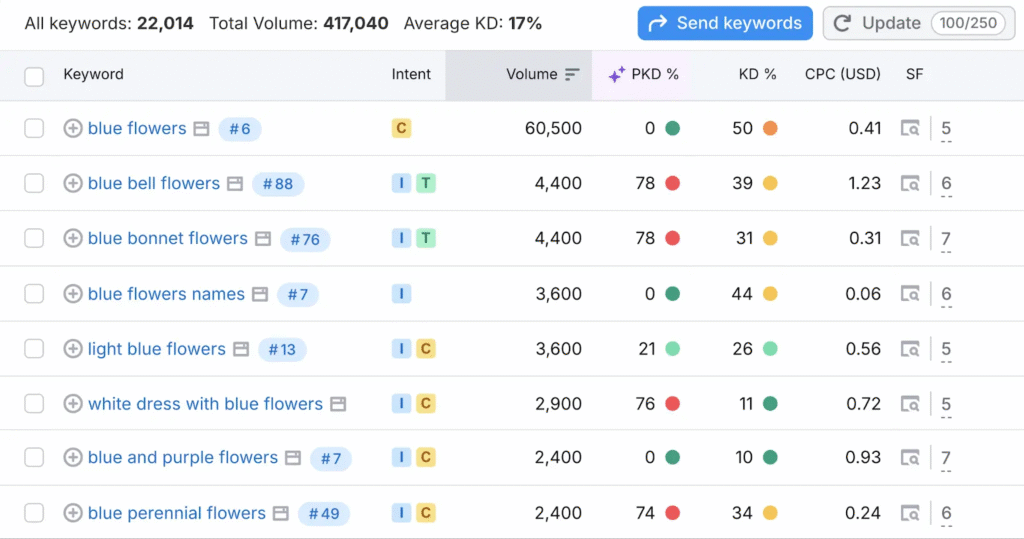
Competitor analysis helps you identify keywords your competitors rank for and discover new opportunities. Use tools like Ahrefs Site Explorer or SEMrush Competitor Analysis.
Steps:
- Enter competitor website
- Check their top organic keywords
- Identify gaps and high-volume opportunities
Step 7: Group Keywords by Topic and Intent
Once you have a list of keywords, organize them into clusters based on topic and search intent. This will help you:
- Create content silos
- Optimize pages for multiple related keywords
- Improve internal linking
Example:
Topic: Keyword Research
- Informational: “How to do keyword research for SEO”
- Transactional: “Best keyword research tools 2025”
- Long-tail: “Step-by-step keyword research guide for beginners”
Step 8: Prioritize Keywords
Prioritize keywords based on:
- Search volume
- Keyword difficulty
- Relevance to your business
- Potential ROI
High-volume keywords bring traffic, but relevance and intent ensure visitors convert into leads or customers.
Step 9: Track and Update Your Keywords
SEO is ongoing. Track your keyword rankings and update your strategy regularly. Tools like Google Search Console, Ahrefs, and SEMrush allow you to monitor:
- Ranking changes
- Click-through rates (CTR)
- Traffic for each keyword
Updating keywords keeps your content competitive and improves long-term SEO performance.
High-Volume SEO Keywords to Include
Here’s a list of high-volume, SEO-friendly keywords you can naturally integrate:
- Keyword research
- SEO tips
- On-page SEO
- Best SEO tools
- How to rank on Google
- SEO techniques
- Content marketing strategy
- Long-tail keywords
- Digital marketing strategies
FAQs
Q1: What is keyword research in SEO?
Keyword research is the process of identifying search terms that people enter into search engines. It helps optimize content to rank higher and attract targeted traffic.
Q2: Why is keyword research important for SEO?
Keyword research ensures your website targets relevant terms with high search volume, improving organic traffic, ranking potential, and conversion rates.
Q3: What are long-tail keywords and why are they important?
Long-tail keywords are longer, specific search phrases (e.g., “how to do keyword research for SEO in 2025”). They have lower competition and higher conversion potential.
Q4: Which tools are best for keyword research?
Popular keyword research tools include Google Keyword Planner, Ahrefs, SEMrush, Ubersuggest, and AnswerThePublic. They provide search volume, competition, and related keyword ideas.
Q5: How often should I update my keywords?
Keywords should be reviewed and updated regularly—at least every 3–6 months—to reflect trends, new search terms, and competitor strategies for optimal SEO performance.
Conclusion
Mastering keyword research for SEO is critical for boosting organic traffic, improving search engine rankings, and reaching your target audience effectively. By following these step-by-step strategies, using high-volume keywords, analyzing search intent, and monitoring results, your website can achieve better visibility and higher conversions.
Remember, SEO success comes from consistency, research, and optimization—not shortcuts. Start implementing these steps today to create a strong keyword foundation for your website.
